Studio Archive · 2021–2024

DYTOMIC

Independent game development studio behind Pirate Raids Online, an old-school inspired PC MMORPG set in the world of Ascaron.

The Studio

Dytomic was an independent game development studio founded in Montreal, Quebec in 2021. Its mission was to build Pirate Raids Online, an old-school inspired PC MMORPG built on an in-house engine with a modern twist.

The studio operated through early 2024, assembling a small founding team, running engineering and creative direction in-house, and commissioning work from internal and external contributors. The company ceased operations in early 2024.

All public repositories are now archived. The code, game design, and research published here remain browsable as an open technical record of what was built.

Team
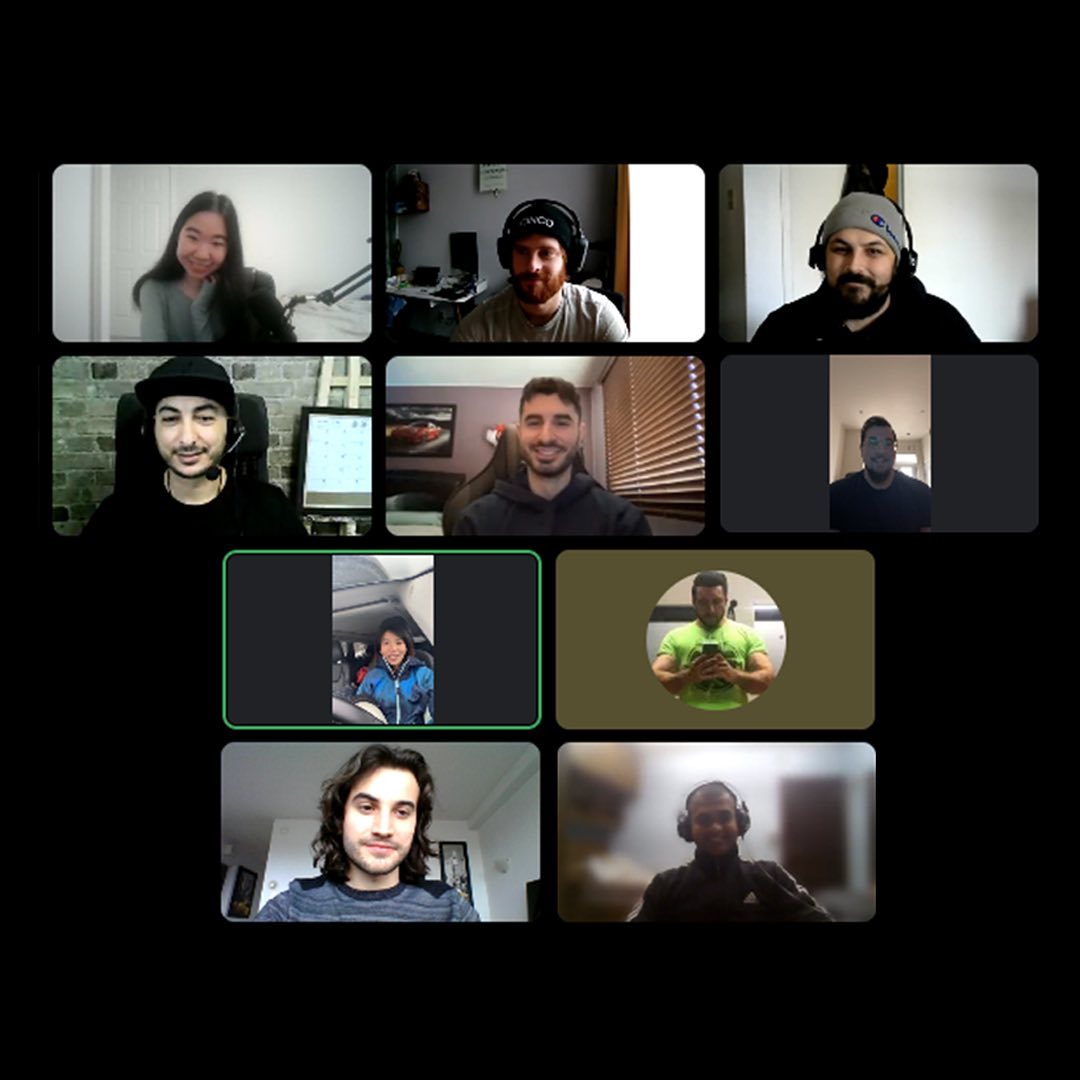
Dytomic team video call with ten members across leadership, engineering, art, and design

A moment from one of Dytomic’s team calls.

Dytomic was built by a small founding team and a network of collaborators. This section recognises individual contributions that are publicly documented.

Tommy Roumanas
Co-Founder · CEO

Co-founded Dytomic and served as CEO from 2021 until the studio’s closure, driving strategic direction and operations throughout the studio’s lifespan. A systems-driven entrepreneur with prior experience across scientific research, finance, and AAA mobile gaming.

Mourad Elsheraey
Co-Founder · CTO

Co-founded Dytomic and served as CTO from 2021 through early 2024, driving the technical direction of the studio and the engineering work behind Pirate Raids Online.

Publicly documented contributions include the live technical-interview process for engineering hires (ball-simulation), the Messenger intake bot (ariel), and a personal body of research into legacy MMORPG engines and their community ecosystems. The research archive is published separately below.

The Game

Pirate Raids Online is an old-school inspired PC MMORPG set in the world of Ascaron. Players lead the Pirate Coalition, made up of four Demigod tribes (Dwarves, Triton, Runeborne, Amazonians), in a rebellion against the tyrannical Navy.

Classless combat, open world PvP, naval combat, and a player-driven economy. The game was in pre-production at the time of the studio closure. The full vision, lore, and design language lives in pro-web.

Public Code
Note: These repositories represent only the publicly released subset of Dytomic’s technical work. They do not reflect the full scope of engineering, tooling, or infrastructure built by the studio. The majority of the codebase remains private and is not included in this archive.

pro-web →

Marketing Site
Next.js 12 React 18 React Bootstrap 2 CSS Modules next/image

The official marketing website for Pirate Raids Online. Eight content sections covering story, world, the four Demigod tribes, combat, ships, and game features. Serves as the public-facing vision document for the game’s narrative and design language.

pro-splash →

Early Splash
React 17 Create React App

The pre-launch splash page that preceded pro-web. Linked to Dytomic’s social channels while the main site was in development. Retired and archived once pro-web shipped.

ariel →

Messenger Bot
Python Flask Gunicorn Facebook Messenger API

A Facebook Messenger chatbot on Dytomic’s page handling visitor questions about job opportunities and Pirate Raids Online. Single-file Python intent resolver backed by JSON intent trees. Named in memory of a co-founder’s beloved dog; the repo deliberately emphasises simplicity over engineering complexity.

ball-simulation →

Hiring Artefact
Vanilla JS CSS GPU Transforms 60 FPS Loop

Live technical-interview starter for game-developer candidates. A browser-based physics sandbox with 1,000 footballs, gravity, mass, and boundary collisions, with the checkCollisions() function deliberately stubbed. Candidates extended it during live interviews under time pressure, exploring their instincts on spatial partitioning and collision response.

Research Archive

This archive preserves research into the Tales of Pirates / Pirate King Online (PKO) engine family and its long-running community modification ecosystem. It was a subject of personal and team interest during the studio's operation, and is maintained here as a public reference for researchers of legacy MMORPG engines and private-server communities.

Note: Pirate Raids Online is built on its own in-house engine. It is not derived from, nor technically based on, the Tales of Pirates or PKO engine. This archive exists as independent research and preservation work.

Each monorepo is a git-subtree mirror of open-source community developer work, with subtrees that can be pulled independently as the original authors publish updates.

pkodev-V3ct0r1024 →

42 Repos · Client + Server Mods
C++ Win32 Shared Library Injection Lua

Mirror of the complete open-source body of work by community developer V3ct0r1024. Contents include the PKOdev mod loader (a shared-library injection system), client-side modifications (framerate, UI, anti-bot, navigation), server-side plugins (daily rewards, GM tools, respawn fixes), the offline stall server, and development tools.

pkodev-Perseus →

6 Repos · Server Infrastructure
Rust Go PHP 8 Laravel JavaScript

Mirror of the TOP/PKO-related work by community developer Perseus. Contents include a GateServer rewrite, a middleman proxy providing traffic filtering and Linux deployability, a server-communication interface, a client asset converter for glTF workflows, and two private-server CMS projects.

top-forums-archive →

3 Forums · Community Archive
HTML Markdown Scrapling

Preserved snapshots of three Tales of Pirates / PKO community forums: pkodev.com (166 threads), forum.ragezone.com (1,350 threads across 5 sections), and go-piratia.ru (167 threads, Russian). Stored in both original HTML and Markdown. Captured to preserve years of private-server development guides, mod releases, and engine reverse-engineering notes as community forums periodically go offline. Browse the archive →

Expertise

Throughout the studio’s operation, Dytomic built deep practical expertise using AI to streamline art delivery. This covered accelerating concept iteration, enforcing style consistency across large asset sets, and integrating AI-assisted workflows into game-ready art production pipelines. That accumulated knowledge remains with the founders. If you’re exploring AI-driven art pipelines for your studio, product, or team, reach out to Mourad or Tommy directly.